
Panic Attacks: Symptoms, Causes, Panic vs Heart Attack and What to Do
A side-by-side guide to panic attack versus heart attack warning signs, the medical conditions doctors rule out, breathing steps from the NHS, how to help someone mid-attack, and free help in India through Tele MANAS.
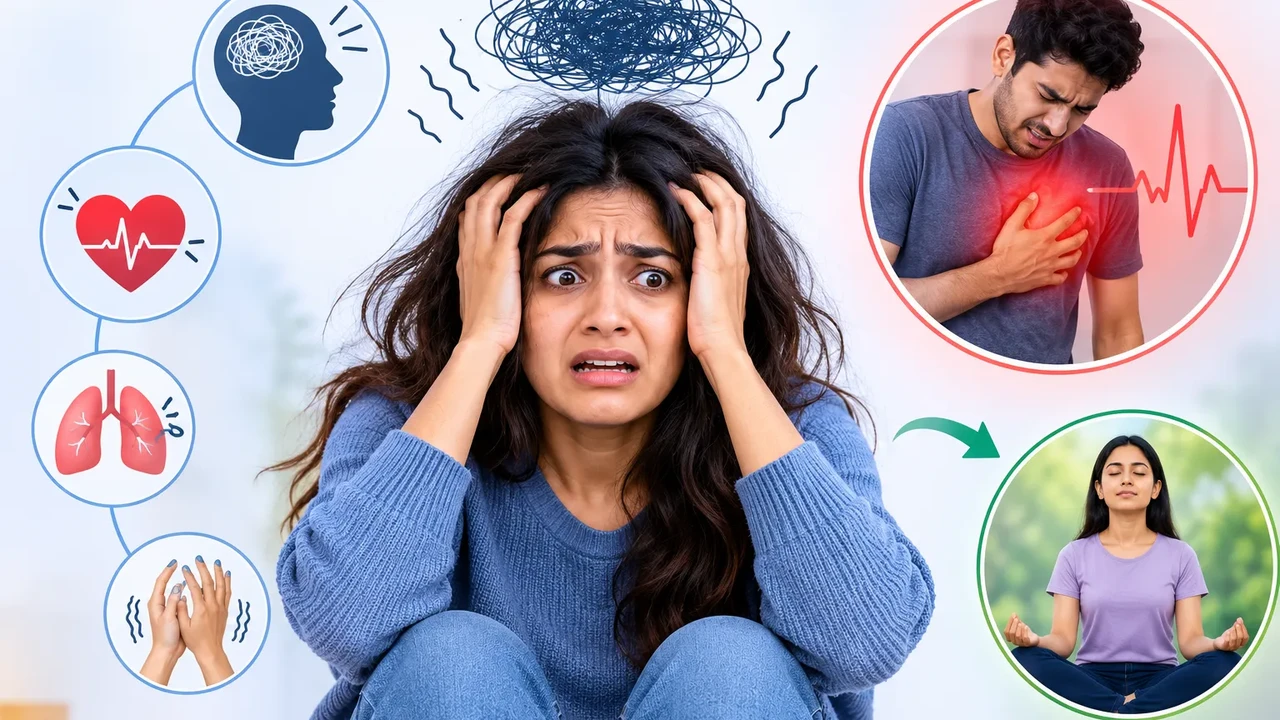
Quick answer: A panic attack is a sudden rush of intense fear with strong physical symptoms, such as a pounding heart, breathlessness, chest pain, shaking and a feeling of dread, when there is no real danger. Symptoms usually peak within minutes, and according to the NHS most attacks last between 5 and 20 minutes. They are frightening but, the NHS says, not dangerous in themselves.
The catch is that a first attack can feel exactly like a heart attack. If you have chest pain and you are not sure what it is, treat it as an emergency: call 112 (or 108 for an ambulance) and get checked. Once a doctor has ruled out a physical cause, panic attacks and panic disorder respond well to treatment.
Symptoms of a panic attack
Panic attacks often come out of the blue, even during sleep or while relaxing. Common symptoms include (NHS, Mayo Clinic):
A racing or pounding heartbeat
Chest pain, a tight chest, or shortness of breath
A choking sensation
Sweating, trembling, shaky limbs, hot flushes or chills
Feeling faint or dizzy
Nausea or a churning stomach
Numbness, pins and needles or tingling fingers
A dry mouth
A sense of dread or a fear of dying
Feeling like you are not connected to your body
Doctors usually describe a panic attack when at least four such symptoms arrive together and build to a peak quickly (Merck Manual says usually within 10 minutes).
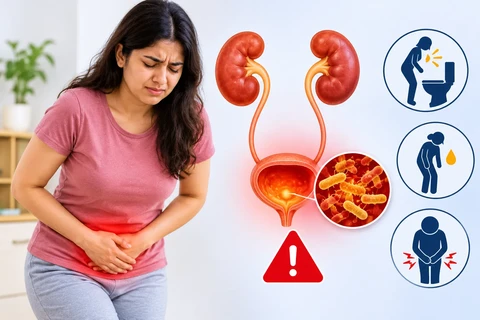
Also read: Urinary Tract Infection (UTI): Symptoms, Causes and When It's an Emergency
Panic attack or heart attack?
This is the question that sends many people to an emergency department, and that is a sensible place to go the first time. Research on people of Indian origin suggests heart disease tends to appear 5–10 years earlier than in other populations, so being young is not a reason to assume chest pain is "just anxiety".
Guidance from Mayo Clinic, the American Heart Association and Cleveland Clinic points to these general differences:
Feature | More typical of a panic attack | More typical of a heart attack |
Chest pain | Sharp or stabbing, stays in the middle of the chest | Pressure, squeezing or heaviness that may spread to the arm, jaw, neck or back |
How it starts | Suddenly, often with a surge of fear; can follow stress | Can be sudden or gradual; may come on during exertion |
How it changes | Peaks within about 10 minutes, then eases | Tends to persist or worsen |
How long | Usually settles within about half an hour | Tends to persist, or comes and goes in waves; easing does not rule it out |
Other signs | Tingling, trembling, feeling unreal | Cold sweat, light-headedness |
These are tendencies, not a test. Symptoms overlap: dread, nausea and breathlessness can occur in both, and the American Heart Association notes that women are somewhat more likely to have symptoms such as breathlessness, nausea, or back or jaw pain. All three sources give the same rule: if in doubt, don't wait to see whether it passes; seek urgent care straight away. That matters most if you have had heart problems before, have risk factors such as diabetes, high blood pressure or smoking, or have never had a panic attack.
What causes panic attacks
The exact cause isn't fully understood, according to both the NHS and Mayo Clinic. Factors that raise the risk include:
Family history: panic disorder sometimes runs in families (NIMH).
Major stress or life changes: a death in the family, a breakup, a new job, a baby, exams.
Traumatic experiences, including abuse in childhood.
Smoking or heavy caffeine use, which Mayo Clinic lists as risk factors.
Differences in brain chemistry and in how the brain handles threat.
Conditions doctors rule out first
Some physical problems and substances can cause the same symptoms. Before diagnosing panic, doctors typically check:
Thyroid function with a blood test (Mayo Clinic).
The heart, usually with an ECG (Mayo Clinic), for heart disease or an abnormal heart rhythm.
Breathing (respiratory) problems (Cleveland Clinic).
Substances: doctors also consider substance use or withdrawal (Merck Manual); MedlinePlus names caffeine, cocaine and other stimulants as triggers to avoid.
If you take herbal or over-the-counter products, Cleveland Clinic advises talking to your doctor first, as some substances can increase anxiety.
Panic attack vs panic disorder
One panic attack does not mean you have a disorder. NIMH describes an isolated attack as a one-time or occasional episode.
Panic disorder is diagnosed when attacks keep coming unexpectedly and, for at least a month, you live in fear of the next one or change your behaviour to avoid them (Mayo Clinic, using the DSM-5-TR criteria). It often starts in the late teens or early adulthood and is more common in women.
Many people then begin avoiding places where an attack happened, such as the metro, crowded markets or lifts. This can grow into agoraphobia, the fear of being somewhere you can't escape or get help. In India, an analysis of the National Mental Health Survey 2015–16 published in the Indian Journal of Psychiatry (2023) found a lifetime prevalence of panic disorder of 0.5%; about 42% of those with panic disorder also had agoraphobia, and about 72% of those currently affected were not receiving treatment.
Our article on anxiety symptoms and causes covers the other anxiety disorders, such as generalised anxiety and social anxiety.
What to do during a panic attack
The NHS and NHS inform (Scotland) suggest:
Stay where you are, if possible. Sit down if you can.
Breathe slowly. Breathe in gently through your nose and out through your mouth. Count steadily from 1 to 5 on each breath in and each breath out. You may not reach 5 at first; keep going for at least 5 minutes.
Remind yourself it will pass. The symptoms come from anxiety and are not life-threatening.
Don't fight it or run. NHS inform suggests riding out the attack; staying put teaches your brain that nothing terrible happens.
Focus on your surroundings as it eases (NHS inform).
How to help someone having a panic attack
Stay with them and stay calm (Cleveland Clinic).
Reassure them gently that they are safe and the attack will pass.
Breathe slowly with them, counting out loud.
Don't tell them to "calm down" or "stop overthinking", and don't crowd them.
If they have chest pain and have never had a panic attack, or if you are unsure, call 112 or 108.
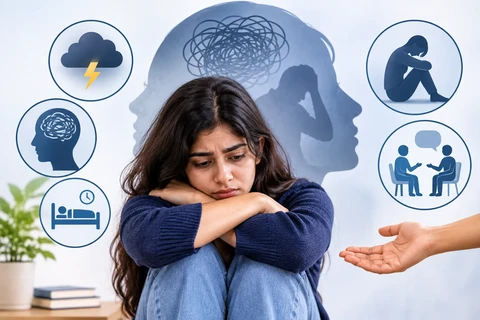
Also read: Schizophrenia: Symptoms, Causes and How It Is Treated
Treatment and long-term help
The NHS says talking therapy and medicine are the main treatments for panic disorder:
Cognitive behavioural therapy (CBT) is the main psychological treatment. It helps you understand the "fear of fear" cycle and gradually face situations you avoid.
Medicines, usually antidepressants of the SSRI type, may be prescribed by a doctor. The NHS notes they can take 2 to 4 weeks to start working and up to 8 weeks to work fully. Benzodiazepine sedatives are generally used only short term because they can be habit-forming (Mayo Clinic). Never start or stop these without your doctor.
Self-help suggested by the NHS: regular exercise, breathing exercises, yoga, avoiding sugary food and drinks, caffeine and alcohol, and stopping smoking.
Panic attacks also often appear alongside depression or after trauma; see our guides to depression and PTSD.
Where to get help in India
Tele MANAS, the government's free mental health helpline: call 14416 or 1-800-891-4416. It runs 24×7 in 20 languages, according to the Press Information Bureau.
Your family doctor or the psychiatry department of a government medical college or district hospital.
In an emergency, or with chest pain you can't explain, call 112 or 108.
When to see a doctor
See a doctor if:
You have had a panic attack for the first time and haven't been checked for a physical cause
Attacks keep happening, or you worry constantly about the next one
You have started avoiding places, travel or work because of them
You are using alcohol or other substances to cope
You also feel low, hopeless or have thoughts of harming yourself (seek help the same day)
Frequently asked questions
Can a panic attack kill you?
No. According to the NHS, panic attacks are frightening but not dangerous. Because the symptoms can resemble a heart attack, get urgent medical help if you are unsure.
How long does a panic attack last?
Most last between 5 and 20 minutes, according to the NHS, and some have been reported to last up to an hour. Symptoms usually peak within the first few minutes.
Can panic attacks happen at night?
Yes. Some people wake from sleep in the middle of an attack. If night-time chest pain is new and you have no history of panic attacks, get it checked urgently.
Is panic disorder curable?
Panic disorder is treatable. Mayo Clinic describes psychotherapy as an effective first choice, and the NHS lists talking therapy and medicine as the main treatments. Mayo Clinic says symptoms often improve significantly within months of starting treatment.
This article is for general information and is not a substitute for medical advice. If you are worried about your symptoms, speak to a doctor.
Filed under Health & Fitness


Comments